



Adakah Lilin Soya Lebih Baik Daripada Lilin Biasa?
2026-07-09 16:59A Complete Comparison
In recent years, soy wax has emerged as a leading alternative to traditional regular wax (primarily paraffin wax) for candles and home
fragrance products. As more consumers prioritize health, environmental sustainability, and long-term usability, a key question arises:Is soy wax better than regular wax?
While both wax types serve the same core purpose of crafting scented candles, their raw materials, burning performance, safety profiles, and ecological impacts differ drastically.
For most home and daily use scenarios, soy wax stands out as a superior choice, thanks to its natural composition, clean burn, and user-friendly advantages.

1. Raw Material Source: Natural & Renewable Soy Wax vs. Petroleum-Based Regular Wax
The most fundamental difference between soy wax and regular wax lies in their origins, which lays the foundation for their distinct traits.
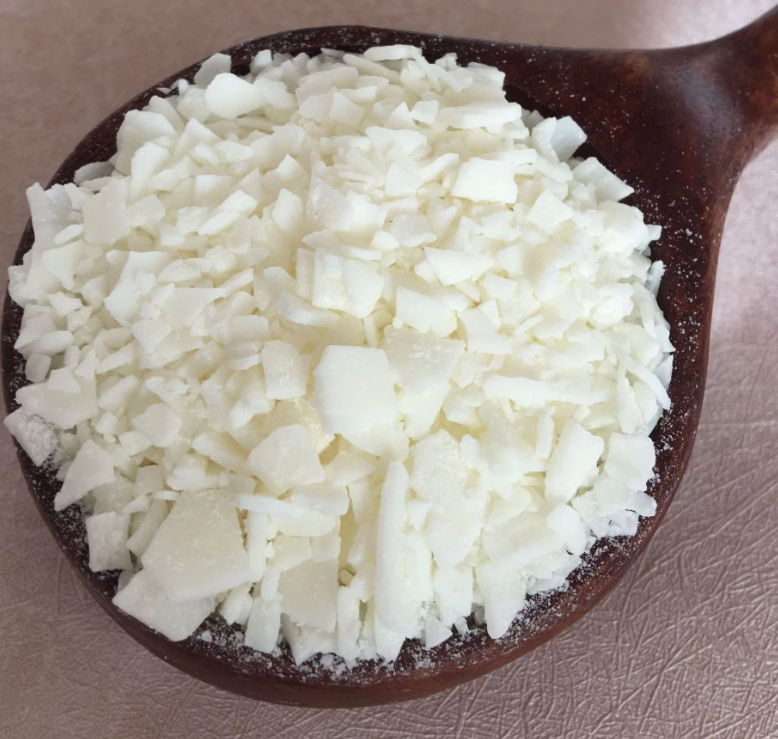
Soy wax is a 100% plant-based wax derived from hydrogenated soybean oil, a fully renewable and sustainable agricultural resource. Soybeans
are widely cultivated, regenerate annually, and require no finite fossil fuel extraction, making soy wax a eco-conscious, green raw material for candle making.
In contrast, standard regular wax (paraffin wax) is a byproduct of petroleum refining, a non-renewable fossil fuel resource.
The production of regular wax relies on crude oil extraction and chemical processing, which consumes finite energy resources and generates industrial waste.
Unlike soy wax, regular wax cannot be naturally degraded, creating long-term environmental pressure after disposal. This renewable advantage alone makes soy wax
a more future-oriented choice for environmentally aware consumers.

2. Health & Air Quality: Soy Wax Delivers a Cleaner, Safer Burn
When evaluating whether soy wax is better than regular wax, indoor air quality and human health are the most critical factors,
especially for household use. Soy wax features an ultra-clean combustion process. Independent lab tests confirm that pure soy wax candles
produce up to 90% less soot than regular paraffin wax candles. They release minimal harmful volatile organic compounds (VOCs), benzene, or toluene—toxic
chemicals commonly emitted by burning regular wax.
Regular wax burns at a higher temperature and contains complex petroleum-based hydrocarbons.
Its incomplete combustion easily produces thick black soot that stains walls, ceilings, and candle jars, while releasing
irritants that trigger allergies, asthma, and respiratory discomfort, especially for kids, pets, and sensitive individuals. Soy wax, with
its simple plant-based molecular structure, burns gently and steadily, leaving almost no residue or toxic emissions.
This makes soy wax the safest option for closed indoor spaces like bedrooms, living rooms, and offices.
3. Burning Performance: Longer-Lasting & More Stable Soy Wax
Another key advantage proving soy wax is better than regular wax is its superior burning performance and cost efficiency.
Soy wax has a lower melting point (49°C to 82°C) compared to regular wax. This lower heat threshold allowssoy wax to melt slowly
and evenly, forming a wide, shallow melt pool that consumes wax at a gradual, consistent pace.
As a result, soy wax candles boast a 20–30% longer burn time than regular wax candles of the same size and weight. Regular wax burns hot and fast, depleting quickly and often causing uneven melting, tunneling, and wasted wax. Additionally, soy wax holds and releases fragrance more softly and evenly over time, delivering a subtle, long-lasting aroma. Regular wax offers stronger instant scent throw but fades rapidly and can produce overwhelming, artificial fragrance bursts. For consistent, all-day gentle scent diffusion,soy wax outperforms regular wax significantly.